In the late 1800s, an era that witnessed the rapid rise of the bicycle as a means of transport, a peculiar societal concern captured public attention: the “bicycle face.” This notion, fueled by prevailing gender norms and evolving societal attitudes, accentuated health risks purportedly associated with women riding bicycles. In this article, we will delve into the concept of bicycle face, explore its historical context, and reflect on the societal implications of this fascinating yet unfounded concern.


Mapping the Rise of Bicycles:
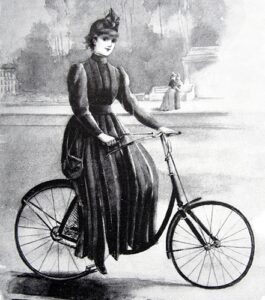
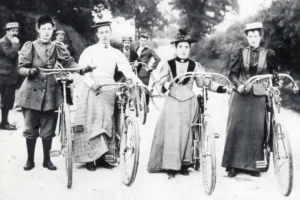
To comprehend the origins of the bicycle face scare, we must first acknowledge the significance of bicycles in the 19th century. As society transitioned into the industrial age, bicycles emerged as a mode of transportation that offered newfound freedom and mobility for women. It became a symbol of independence, breaking societal norms of the time.
The Bicycle Face Myth:
During this period, concerns surrounding women’s physical and mental well-being gained momentum. Detractors of women’s cycling used various arguments to discourage their engagement in this new activity. One of the most peculiar claims was the development of “bicycle face,” a supposed health malady unique to women who rode bicycles.
Exploring Bicycle Face:
According to early reports, bicycle face referred to a distinct set of symptoms experienced by women, such as bulging eyes, a flushed complexion, and an overall strained appearance. It was suggested that the energy exerted during cycling led to facial distortions and health risks exclusive to women.
Societal Attitudes and Gender Biases:
To understand this phenomenon, we must consider the societal norms and gender biases prevalent during the 19th century. Women had limited freedom and were meant to conform to traditional roles, often focusing on domestic responsibilities rather than engaging in physical activities. The rise of women’s cycling challenged societal expectations, leading to concerns about the potential negative consequences.
Challenge to Patriarchal Control:
The bicycle face scare can be interpreted as an attempt to curtail the autonomy women were gaining through cycling. By associating health risks and facial disfigurements with this activity, society aimed to dissuade women from embracing such newfound independence. It was an endeavor to maintain patriarchal control over women’s lives, perpetuating the notion that their role should remain confined to domestic duties.
Modern perspectives and debunking the myth:
While the concept of bicycle face was widely circulated during the 19th century, it eventually faded away as societal attitudes evolved. The medical community did not support the claims made about bicycle face, and it was recognized as an unfounded scare tactic. Women continued to ride bicycles, and over time, the myth was debunked and dismissed as another attempt to restrict their autonomy.
Conclusion:
The bicycle face scare serves as a reminder of the societal anxieties surrounding women’s changing roles in the 19th century. In the face of women’s increasing independence and the challenges posed to traditional gender roles, unfounded health concerns were used as a tool to preserve patriarchal control. Today, we reflect upon and debunk such notions that hinder progress and restrict individual freedom, celebrating the courage of these early female cyclists who defied societal expectations and embraced their independence atop their trusty bicycles.