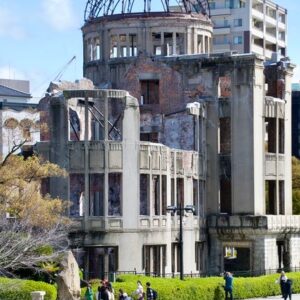
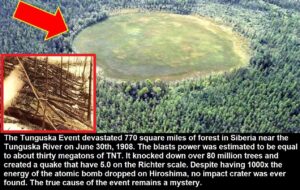
In the early morning hours of June 30, 1908, an enormous explosion rocked the remote region of Tunguska, Siberia, with such force that it flattened over 80 million trees across an area of more than 2,000 square kilometers. Known as the Tunguska Event, this baffling occurrence has left scientists scratching their heads for over a century. Despite numerous investigations and theories, the exact cause of the explosion remains elusive, giving rise to a multitude of explanations, from meteorites to alien activity. In this article, we delve into the Tunguska Event, exploring its puzzling details and theories while attempting to shed light on this enigma.
The Tunguska Event:
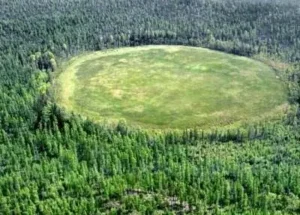
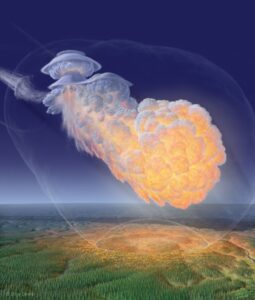
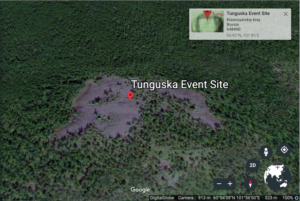
The location of the Tunguska Event was a remote forested area near the Podkamennaya Tunguska River in Siberia, Russia. Eyewitness accounts describe a sudden bright light that lit up the sky, followed by a powerful shockwave strong enough to knock people off their feet, and a subsequent blast that flattened trees and caused widespread devastation over hundreds of square kilometers.
Scientific Investigations:
The first scientific expedition to study the Tunguska Event was led by Leonid Kulik in 1927, nearly two decades after the incident. However, due to the difficult terrain and political circumstances surrounding the expeditions, investigations were sporadic over the years. Researchers faced limited resources, making it challenging to gather definitive evidence.
Meteorite or Comet?
The leading hypothesis regarding the Tunguska Event suggests that it was caused by an extraterrestrial object, such as a meteorite or comet, entering the Earth’s atmosphere. Upon entry, the intense heat generated by the object as it rapidly descended caused an explosion in the air rather than impacting the ground directly. This is referred to as an “air burst.”
Supporting this theory, researchers have discovered tiny glass-like particles, known as “sporodans,” that were found in the soil and tree resin near the blast site. These particles display signs of intense heating, suggesting they were formed during a high-temperature event consistent with an air burst.
Alternative Explanations:
While the meteorite or comet hypothesis is widely accepted, several alternative explanations have been proposed over the years. These include the idea of an anti-matter collision, a black hole passing through Earth, or even alien intervention. However, these theories lack substantial evidence and scientific support.
Ongoing Studies:
In recent years, technological advancements have allowed researchers to make significant progress in understanding the Tunguska Event. Using satellite imagery, ground-penetrating radar, and forensic analysis techniques, scientists have been able to reconstruct the event in more detail.
One notable discovery was a series of small lakes near the impact site that were formed as a result of the tremendous heat produced by the explosion. These lakes bear unique chemical signatures and provide valuable clues for further investigations.
Conclusion:
The Tunguska Event stands as one of the most puzzling mysteries of the 20th century. While the most plausible explanation involves the air burst of a meteorite or comet, scientists continue to explore this event tirelessly, hoping to unlock its secrets and gain deeper insights into Earth’s history and the nature of cosmic impacts. The Tunguska Event serves as a reminder that our vast universe still holds many enigmas, waiting to be unraveled by the inquisitive minds of scientists and researchers.