


In the annals of maritime history lies a haunting tale of the Batavia shipwreck, a tragic event that took place in 1629 off the treacherous coast of Western Australia. This fateful journey not only witnessed a catastrophic shipwreck but also unraveled a brutal mutiny, leading to one of the most distressing and violent episodes in seafaring history. Join us as we delve into the gripping story of the Batavia and its ill-fated voyage, exploring the harrowing events that unfolded and forever left a mark on Australia’s maritime past.

The Batavia’s Ill-Fated Journey:
In October 1628, the Dutch East India Company’s ship, the Batavia, set sail from the Netherlands, bound for the Dutch East Indies (present-day Indonesia). Carrying a crew of over 300 men, the ship embarked on its journey under the command of Captain Francisco Pelsaert. Laden with trade goods, including valuable silver coins and jewels, the Batavia’s expedition was primed for prosperity.
The Wreck and the Mutiny:
On the morning of June 4, 1629, disaster struck as the Batavia ran aground on Morning Reef, off the Houtman Abrolhos Islands in Western Australia. As chaos ensued, over 200 survivors clung to wreckage, hoping for rescue in this remote and perilous locale. However, what started as a struggle for survival would soon degenerate into something much more sinister.
The Machinations of Jeronimus Cornelisz:
Amidst the wreckage, a sinister plot unfolded. The ship’s under-merchant, Jeronimus Cornelisz, emerged as a central figure in orchestrating a mutiny, aiming to seize control and exploit the survivors for his own gain. Cornelisz believed that by reducing the number of survivors, their limited resources would stretch further, ensuring his own survival and domination.
Unleashing an Unprecedented Wave of Violence:
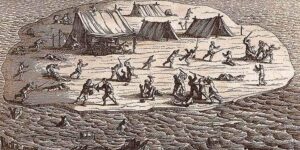
Driven by greed and power, Cornelisz recruited a band of loyal followers, subsequently descending into a series of barbaric acts. These brutalities included murder, rape, and torture—redefining the depths of human depravity. The survivors who refused to submit to this tyranny faced unimaginable cruelty at the hands of Cornelisz and his cohort.
Heroism and a Struggle for Justice:
Amidst a seemingly hopeless situation, a beacon of hope emerged in the form of Wiebbe Hayes, a soldier who rallied a group of loyalists to protect themselves against the mutineers. Incredibly, Hayes and his small band resisted Cornelisz’s reign of terror, fortifying themselves on West Wallabi Island until help arrived.
The Aftermath and Consequences:
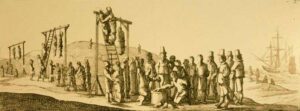
Eventually, a rescue mission led by Captain Pelsaert arrived, bringing an end to the reign of terror unleashed upon the survivors. Pelsaert swiftly arrested Cornelisz and his followers, bringing them to justice for their heinous crimes. For their roles in the mutiny and the subsequent violence, numerous mutineers faced public executions, ensuring that justice was served.
Legacy of the Batavia:
The Batavia and its tragic fate serve as a testament to the triumph of the human spirit over abhorrent acts of cruelty. Although the incident itself remains a dark chapter in history, it played a pivotal role in shaping Western Australia’s maritime history and the ongoing study of maritime archaeology.
Conclusion:
The Batavia shipwreck and mutiny stand as a stark reminder of both the darkest depths and the resilience of the human spirit. This horrifying tale of survival, betrayal, and the pursuit of justice has etched itself into Australia’s maritime history, serving as a timeless cautionary tale for generations to come. As we explore these chilling events, we must never forget the cost paid by the innocent victims caught in the grip of an unparalleled tragedy aboard the ill-fated Batavia.