


Deep in the heart of Mali, nestled amongst the cliffs and savannahs, lies a tribe with an ancient secret. The Dogon people, known for their rich cultural heritage, shroud themselves in the enigma of possessing knowledge about Sirius B, a companion star to Sirius A, long before modern science confirmed its existence. In this article, we explore the fascinating story behind the Dogon people’s astronomical awareness and unravel the mystery that continues to captivate researchers worldwide.


The Dogon People:
The Dogon people are an ethnic group native to the Bandiagara Escarpment in Mali, West Africa. Ancient artifacts and cultural traditions suggest that they have inhabited this region for thousands of years. Guided by age-old customs and beliefs, the Dogon have developed an intricate understanding of the cosmos, sparking curiosity among scholars and astronomers.
The Discovery of Sirius B:
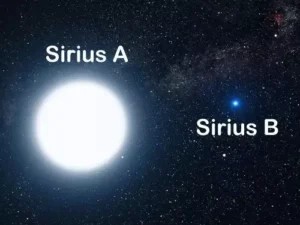
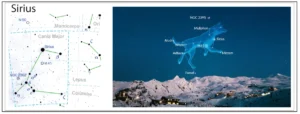
In the 1930s, French anthropologists Marcel Griaule and Germaine Dieterlen embarked on a groundbreaking expedition to study the Dogon people. It was during their research that they stumbled upon the Dogon’s intricate knowledge of Sirius B, a dwarf star and the companion to Sirius A, the brightest star in the night sky.
According to Dogon mythology, they were visited by a celestial being, Nommo, who arrived on Earth in a vessel resembling a comet. The Nommo brought important knowledge regarding the Sirius star system, including the invisible companion star, Sirius B. Remarkably, the Dogon people were aware of the star’s orbital period, density, and even its association with invisible spiraling rings.
Ancient Wisdom or Stroke of Luck?
The Dogon’s detailed knowledge of Sirius B has led to a longstanding debate between skeptics and believers. Critics argue that it is merely a coincidence or a product of speculative interpretation, while proponents believe in the existence of ancient knowledge passed down through generations.
Skeptics posit that the Dogon’s knowledge of Sirius B might have been influenced by early contact with European astronomers during the colonial era. Others suggest it could be the result of imaginative storytelling that gradually transformed into apparent “fact” over time.
Astronomical Confirmation:
To resolve the controversy surrounding the Dogon’s alleged knowledge, modern astronomers examined Sirius A and B using advanced telescopes and spectrography techniques. In the 1970s, researchers from France’s National Centre for Scientific Research confirmed the existence of Sirius B, validating the ancient Dogon claims.
Scientific Explanation:
Sirius B, or the “Pup,” is a white dwarf star located approximately 8.6 light-years away from Earth. Its small size and intense gravitational pull make it incredibly difficult to observe without the aid of specialized equipment. The Dogon knowledge of Sirius B’s orbital period and density aligns astonishingly well with scientific findings.
One plausible explanation for the Dogon’s accurate knowledge is the exceptional observational abilities and the remarkable oral tradition preserved within their culture. Through generations of stargazing and passing down of knowledge, the Dogon people meticulously observed the night sky, encoding their findings through myths and legends.
Conclusion:
The mystery surrounding the Dogon people’s awareness of Sirius B continues to captivate both scholars and enthusiasts alike. Whether attributed to exceptional observation, ancient dialogue with advanced beings, or pure chance, their knowledge of Sirius B stands as a testament to human curiosity and the enduring enigma of our universe. The Dogon people preserve a unique piece of ancient wisdom, imparting insight into a celestial mystery that remains at the heart of scientific exploration.