

In the quaint and picturesque landscape of 17th-century Netherlands, a remarkable phenomenon occurred that would forever etch its name in economic history ─ the Dutch Tulip Mania. This enthralling tale revolves around the rapid rise and catastrophic collapse of tulip bulb prices, sending shockwaves across the Dutch economy. Exploring the concept of economic bubbles, this article delves into the fascinating story of the Dutch Tulip Mania, from its humble beginnings to its astonishing peak before its eventual downfall.



A Blossoming Obsession:
The roots of the Dutch Tulip Mania can be traced back to the late 16th century when tulips found their way to the Netherlands from the Ottoman Empire. Initially, these vibrant and exotic flowers were a symbol of wealth and rarity, captivating the aristocratic class. Their captivating beauty and unique color patterns made them highly sought-after, fueling a burgeoning interest and desire for tulip bulbs.
The Birth of a Market:
With increasing demand, tulip bulbs gradually transformed into a speculative asset. The Dutch could not resist the allure of high profits that could be made from tulip bulb trading. The first formalized tulip market emerged in the mid-17th century, known as “windhandel” or “wind trade,” where contracts for future tulip bulb purchases were continually bought and sold, even before the bulbs were harvested.
Exponential Price Surge:
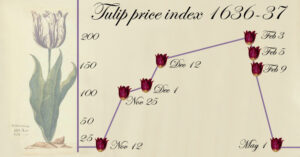
As the tulip trade flourished, an extraordinary economic bubble began to take shape. Prices for tulip bulbs skyrocketed, fueled by fervent speculation and a growing frenzy. The mania reached its pinnacle in the winter of 1636-1637 when tulip bulb prices soared to staggering levels, with rare bulbs commanding astronomical sums. One single bulb of the highly coveted Semper Augustus variety reportedly sold for the equivalent of a luxurious house in Amsterdam.
The Contagious Hysteria:
The Dutch Tulip Mania captivated all segments of society, as people from different walks of life poured their savings into tulip bulbs in hopes of earning unimaginable profits. As prices soared, individuals financed bulb purchases through debt, and the market spiraled out of control. Even those who initially questioned the reliability of tulip bulb prices were lured into this speculative frenzy, becoming unwilling participants in the bubble.
The Fall from Grace:
Like all economic bubbles, the tulip mania could not defy logic forever. As reality set in, it became apparent to some that the tulip market was built on fragile foundations. Doubt crept in, and widespread panic ensued. Suddenly, buyers vanished from the market, and tulip bulb prices plummeted. Within a matter of weeks, fortunes evaporated and the tulip mania crashed, leaving countless investors financially devastated.
The Aftermath and Lasting Lessons:
Following the collapse of the tulip market, the Dutch government had to intervene to alleviate the crisis and restore confidence in the economy. However, the mania had already caused significant economic damage and resulted in years of financial recovery. The Dutch Tulip Mania stands as a testament to greed, irrational exuberance, and the human tendency to get swept up in speculative fervor.
Conclusion:
The Dutch Tulip Mania stands as a captivating episode in economic history, serving as a stark reminder of the potential consequences of an unchecked frenzy. This extraordinary economic bubble saw tulip bulbs transform into a symbol of unbridled speculation, eventually succumbing to the laws of supply and demand. Examining the rise and fall of the Dutch Tulip Mania unravels the concept of economic bubbles, urging caution and highlighting the importance of rational thought in the face of enticing yet volatile markets.