


In the annals of history, few mysteries captivate our imagination quite like the enigma of Roanoke. Situated on the eastern coast of what is now North Carolina, the “Lost Colony” of Roanoke experienced a perplexing disappearance in the late 16th century that has left historians and archeologists puzzled for centuries. Let us delve into the details surrounding this enduring enigma and explore the theories and speculations that surround this mysterious event.
The Roanoke Settlement:
In 1587, a group of English colonizers led by John White established the Roanoke Colony on the island of Roanoke. This early attempt at colonization in the New World aimed to establish permanent English presence in the region. The settlers included men, women, and children, totaling approximately 118 individuals in total.
An Unexpected Return:
Not long after the settlement was established, John White, acting as the colony’s governor, was sent back to England to procure additional supplies and support. Due to unforeseen circumstances, White’s return to Roanoke was delayed for nearly three years.
Disappearance without a Trace:
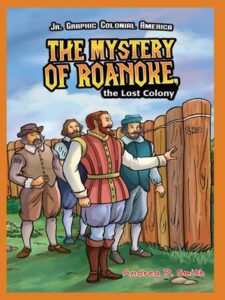
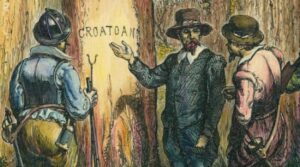
When White finally returned to Roanoke in 1590, he was met with an eerie sight. The entire colony had vanished, leaving no signs of struggle, destruction, or clear explanations for their disappearance. The only trace that remained was the word “Croatoan” carved into a tree and the letters “C-R-O” etched on a post.
Theories and Speculations:
1. Native American Involvement:
Given the strained relationships between the settlers and the indigenous tribes in the area, one theory posits that Native Americans may have played a role in the disappearance. Battles, starvation, or assimilation with local tribes are possibilities, although definitive evidence remains elusive.
2. Relocation:
The presence of the word “Croatoan” suggests that the settlers may have decided to relocate to the nearby Croatoan Island, where friendly Native American tribes resided. However, lack of concrete evidence and the absence of a definitive explanation leave this theory inconclusive.
3. Integration with Native Tribes:
Another possibility is that the Roanoke settlers assimilated with a Native American tribe, intermarrying and blending into the local population. Some historians believe this theory is supported by the presence of individuals with European features reported in later Native American communities.
4. Environmental Factors:
Harsh weather conditions, famine, or disease could have contributed to the settlers’ demise. Epidemics and scarcity of resources were common challenges faced by early colonial settlements, and Roanoke may not have been an exception.
Conclusion:
The mystery of Roanoke’s “Lost Colony” continues to baffle historians and archeologists alike. Despite numerous theories and investigations over the years, a clear and definitive answer remains elusive. The story of Roanoke serves as a haunting reminder of the fragility of early colonial expeditions and the enigmatic fate that befell one of the earliest English attempts at permanent settlement in the New World. The unsolved mystery of Roanoke will persist as a testament to the mysteries that history occasionally withholds from us, inviting future generations to explore and unravel their secrets.