

In the annals of history, conflicts have often been fueled by territorial disputes, ideological differences, or resource scarcity. However, sometimes even the most trivial objects can ignite tensions and escalate to full-blown wars. Such was the case with the War of the Bucket, an intriguing conflict that unfolded between the Italian city-states of Modena and Bologna in 1325. This article aims to delve into this peculiar conflict, exploring the historical context, cause, and consequences with a touch of curiosity and intrigue.



Historical Context:
Italy during the 14th century was a mosaic of independent city-states vying for territorial control and regional influence. In this competitive landscape, Modena and Bologna were two powerful rivals, frequently clashing over politics, trade routes, and strategic advantages. Amidst this ongoing tension, a seemingly inconspicuous object, a wooden bucket, would become the catalyst for an absurd war.


The Crime and the Demand:
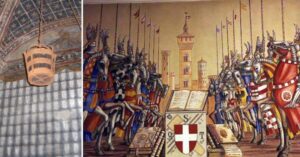
On the fateful night of November 27, 1325, a group of Modenese soldiers stealthily entered Bologna and committed what eventually would be considered the “crime of the century.” They stole a wooden bucket, a simple household item that had inadvertently become a symbol of local pride for the Bolognese. The audacious act of theft ignited an outrage among the citizens and leadership of Bologna, leading to an immediate demand for the return of the bucket.
The Ongoing Tensions:
The bucket’s theft was not an isolated incident; it occurred within the backdrop of pervasive antagonism and competition between the two cities. Modena and Bologna had been engaged in a longstanding struggle for dominance, seeking to control key trade routes, agricultural lands, and political influence. Years of simmering animosity combined with this audacious theft propelled the tension to a boiling point.
War Erupts over a Bucket:
As tensions escalated, Bologna demanded the return of the bucket while Modena, unfazed, dismissed the demand outright. Feeling humiliated and disrespected, Bologna declared war on Modena, with the rallying cry of defending their dignity and reclaiming their treasured possession. Thus, the War of the Bucket was unleashed, a conflict that seemed simultaneously ridiculous and tragic.
The Aftermath and Symbolism:
Though the war lasted a mere few weeks, it resulted in several skirmishes, minor battles, and casualties on both sides. Eventually, Modena emerged as the victor, strengthening its position and showcasing its dominance over Bologna. However, the conflict left an indelible mark on the collective memory of the region, forever associating these two cities with an almost comically obscure cause for battle.
Lessons from the War of the Bucket:
While the War of the Bucket appears absurd when examined through the lens of reason, it represents the complex dynamics of power, pride, and symbolism that can motivate individuals and societies to engage in conflict. It demonstrates humanity’s capacity for passionate defense of symbols, no matter how trivial, and the irrationality that can ensue when long-standing tensions intersect with a seemingly insignificant trigger.
Conclusion:
The War of the Bucket stands as an intriguing and bewildering chapter in history, reminding us that conflicts can arise from even the most trivial objects and push societies to the brink. While the loss or gain of a wooden bucket might seem inconsequential, this curious conflict serves as a remarkable example of the intimate connection between pride, symbolism, and the lengths to which people will go to defend them.