History Mysteries

The Curious Case of the Medieval Werewolf Trials

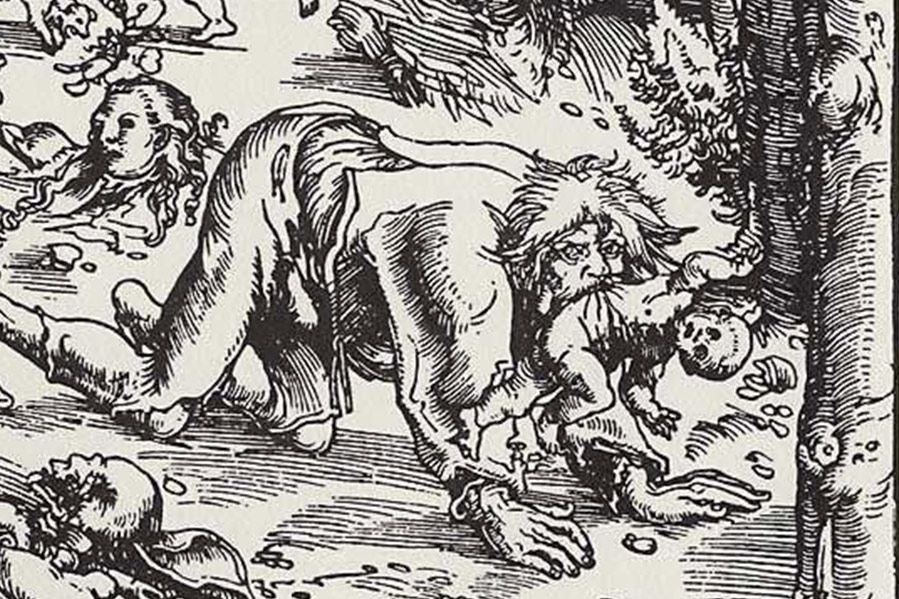
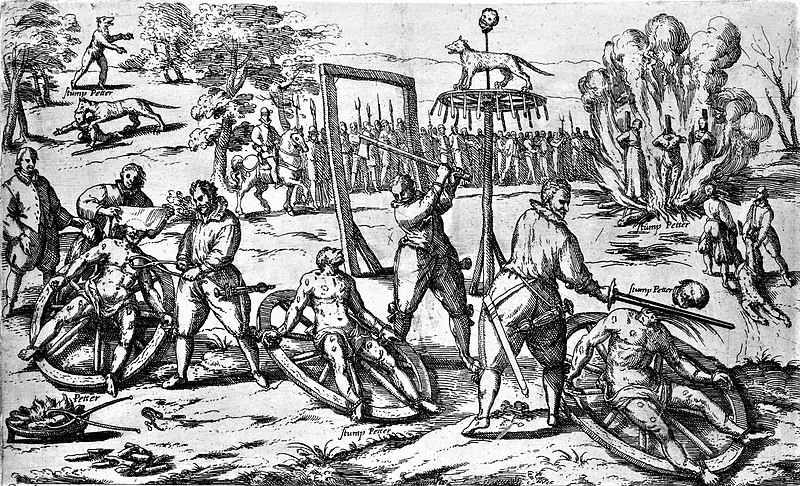
Beyond witch trials, medieval Europe also witnessed an intriguing phenomenon—the werewolf trials. These bizarre legal proceedings sought to prosecute individuals believed to have transformed into wolves. Here’s a glimpse into this lesser-known aspect of medieval history.

  1. The Accused: Men and women accused of lycanthropy faced charges of witchcraft and heresy. They were suspected of using magic or demonic pacts to transform into wolves and commit heinous acts.
  2. Shapeshifting Beliefs: The werewolf trials stemmed from widespread folklore and superstitions about shape-shifting creatures. Many believed that certain individuals possessed the ability to transform into wolves under the influence of a full moon.
  3. Trials and Torture: Similar to witch trials, suspected werewolves endured harsh interrogations and torture to extract confessions. Testimonies often included accounts of wolf transformations, participation in occult rituals, and cannibalism.
  4. Historical Context: Werewolf trials peaked in the 15th and 16th centuries, coinciding with the wider witch-hunt fervor of the time. The trials reflected the anxieties and fears of a society grappling with the unknown and supernatural.
  5. Decline and Legacy: Over time, the hysteria surrounding werewolves waned, and the trials lost their popularity. Today, they serve as a peculiar reminder of the intersection between folklore, superstition, and the legal system in medieval Europe.

The werewolf trials, though largely forgotten, offer an intriguing glimpse into the complexities of medieval belief systems and the lengths to which societies would go to uncover the truth, or what they perceived as the truth.
Related Posts

The Beothuk People: Tragic Tale of Cultural Extinction in Newfoundland, Canada

The history of indigenous peoples is often marked by resilience and struggle. The Beothuk people, the original inhabitants of Newfoundland, Canada, faced an unfortunate fate as they battled…

The Donner Party: The ill-fated journey of the Donner Party in 1846-1847, a group of pioneers stranded in the Sierra Nevada mountains who resorted to cannibalism to survive

In the annals of American history, few stories capture the human spirit’s endurance and the depths of desperation as profoundly as the ill-fated journey of the Donner Party…

The Ghost Town of Pripyat: Uncover the haunting legacy of Pripyat, the abandoned city near the Chernobyl Nuclear Power Plant, evacuated after the 1986 nuclear disaster

In the heart of Ukraine lies a place frozen in time, where the echoes of past life linger amongst overgrown streets and decaying buildings. Pripyat, once a bustling…

The Eruption of Mount Tambora: The catastrophic eruption of Mount Tambora in 1815, the most powerful volcanic eruption in recorded history, which caused the “Year Without a Summer”

In the annals of recorded history, one volcanic eruption stands above them all in terms of sheer devastation and global impact: the eruption of Mount Tambora in 1815….

The Spanish Influenza in the Pacific: Unveiling the Global Reach of the 1918 Pandemic

In the tumultuous year of 1918, a devastating global pandemic known as the Spanish Influenza swept across the world, leaving no region untouched. Often overlooked are the remote…

The Madagascar Plan: Nazi Germany’s Controversial Proposal for Jewish Relocation

During World War II, Nazi Germany devised a plan to address what they perceived as the “Jewish problem” through mass deportation. The Madagascar Plan, proposed in the 1930s,…

Leave a Reply

Your email address will not be published. Required fields are marked *