The early 19th-century witnessed profound societal and economic changes brought about by the Industrial Revolution. While this period marked a significant leap in technology and productivity, it also led to social unrest. Among those discontented by industrialization, the Luddites emerged as an influential social movement, protesting against the mechanization of labor. In this article, we will delve into the concept of the Luddites, their motivations, actions, and long-lasting significance.


The Origins:
In the early 1800s, traditional cottage industries flourished throughout England. Skilled artisans, such as weavers, framework knitters, and textile workers, relied on these industries to sustain their livelihoods. However, with the advent of machinery and the factory system, traditional manual labor was being rapidly replaced by mechanized production. Fearful of losing their jobs and way of life, the Luddites began their resistance against these new technologies.
Who Were the Luddites?
The term “Luddite” is believed to have originated from Ned Ludd, a legendary figure who supposedly destroyed weaving machinery in the late 18th century. While Ludd himself may have been a fictional character, the Luddite movement gained momentum in the framework knitting communities of Nottinghamshire, Leicestershire, and Yorkshire.
Motivations for Resistance:
The Luddites’ primary concern was the threat posed by the introduction of labor-saving machines. They argued that these machines undermined their skills, reduced wages, and threatened their job security. Additionally, they feared that this displacement would result in the degradation of their working conditions and the exploitation of workers in factories.
The Luddite Actions:
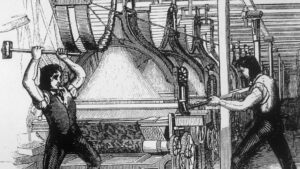
Between 1811 and 1817, the Luddites employed various methods to voice their dissent against industrialization. Their actions ranged from organized acts of machine-breaking to wage strikes and protests. The most notable form of resistance was the destruction of machinery, particularly the stocking frames that played a crucial role in the textile industry. Such actions aimed to directly impact factory owners and disrupt the industrial infrastructure they relied upon.
The Government’s Response:
The Luddite movement faced immense opposition from the government, which viewed their actions as threats to law and order. The British Parliament passed the Frame-Breaking Act in 1812, imposing harsh penalties, including execution, for machine-breaking. Thousands of soldiers were deployed to quell the protests, resulting in the arrest, trial, and punishment of many Luddite followers. Government measures suppressed the movement and eventually led to its decline.
Legacy and Historical Significance:
Although ultimately unsuccessful, the Luddites’ resistance shaped public opinion regarding the social impact of technological advancements. Their actions highlighted the tensions between labor and capital in the face of rapid industrialization. The Luddite movement laid the groundwork for the formation of labor unions and the development of workers’ rights movements that aimed to ensure fair treatment and protection in the industrial age.
Conclusion:
The Luddite movement, born out of fear and frustration with mechanization during the early 19th-century Industrial Revolution, represents a significant chapter in social history. While the Luddites may have resorted to extreme measures, their concerns about the impact of technological progress on labor continue to resonate today. Acknowledging their story offers valuable insights into the importance of balancing technological advancement with the well-being and protection of workers.