In the early 19th century, a strange and unexpected climatic event occurred that left the world shivering in the grip of an unusually cold and dark summer. This phenomenon, known as the “Year Without a Summer,” had a substantial impact on global weather patterns and resulted in widespread crop failures. In this article, we will explore the cause behind the climatic anomaly of 1816, how volcanic eruptions triggered global cooling, and the lasting impacts it had on societies worldwide.
Causes of the “Year Without a Summer”:
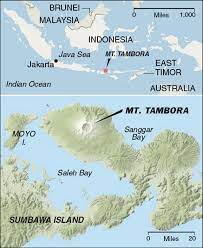
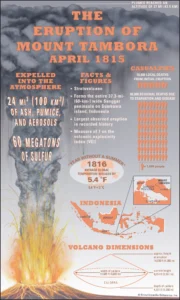
The primary cause of the Year Without a Summer can be traced back to the powerful eruption of Mount Tambora, located in Indonesia, in April 1815. This massive volcanic eruption emitted an enormous amount of ash, sulfur dioxide, and other gases into the Earth’s atmosphere, creating a dense volcanic cloud.
The Volcanic Cloud’s Effect on Climate:
When volcanic ash and gases are released into the atmosphere, they can reach the stratosphere, where they remain for an extended period. This volcanic cloud can have significant consequences on global climate. Sulfur dioxide, in particular, reacts with water vapor to form tiny droplets of sulfuric acid, which increases the Earth’s albedo, or reflectivity. This increased reflectivity causes less sunlight to reach the Earth’s surface, consequently leading to a cooling effect.
Global Cooling and Its Impacts:
The volcanic cloud resulting from Mount Tambora’s eruption caused a significant global cooling effect, manifesting most notably in 1816—the following year. The Northern Hemisphere experienced unusually low temperatures during spring, summer, and autumn, leading to frosts, snowfall, and even frozen rivers in some regions.
Impact on Agriculture and Food Shortages:
The severe cooling and the subsequent frosts decimated crops in many parts of Europe, North America, and Asia. The timing of the frosts was particularly detrimental as they attacked early sprouting plants and late-maturing crops, resulting in crop failures on a massive scale. Subsequently, the widespread agricultural disruption led to food shortages and skyrocketing prices, causing hardship and famine in numerous regions.
Societal and Cultural Effects:
The Year Without a Summer had profound social, economic, and cultural consequences across the affected regions. The agrarian-based economies of the time suffered greatly, with farmers and agricultural workers facing immense hardships due to failed harvests. Crop failures disrupted the social fabric, sparking unrest and migration. The economic impact was felt in various industries, leading to bankruptcies and unemployment.
Literature and Artistic Influence:
During this gloomy and cold period, renowned authors such as Mary Shelley, John William Polidori, and Lord Byron found themselves confined indoors. Unable to engage in outdoor activities, they turned to writing and storytelling. This gloomy atmosphere inspired Mary Shelley to pen her masterpiece, “Frankenstein,” a classic that reflected the unsettling ambiance of the time.


Conclusion:
The Year Without a Summer was a climatic anomaly caused by the volcanic eruption of Mount Tambora in 1815. The subsequent release of volcanic gases and ash into the atmosphere led to global cooling, reduced sunlight reaching the Earth’s surface, frosts, and widespread crop failures. The impacts of this event reverberated across societies, causing social unrest, economic hardship, and even influencing artistic and literary endeavors of the time. The Year Without Summer serves as a reminder of the interconnectedness between nature and human existence, highlighting how climatic events can significantly shape our lives.